In my post yesterday I provided some background to my (growing) passion and interest in building guitars—and regrouping around my first “stalled” attempt to build a 50s P-bass.
I will be getting back to that project, as it remains a great point of learning and refining my skills. And, as a fan of Sting and Mike Dirnt (among other reasons), I really dig the 50s P style!!
Despite the missteps I described in my last post, I’m feeling buoyed by the progress I’ve made, already. And, as I said, I’m hooked!
So, in my “downtime”, I started thinking about what my “next project” might be. Would I build a 70s Deluxe Tele, like the one I wish I’d never sold? Would I build an Axis-style hard-tail?
Every time I was thinking about it, I kept coming back to the question: Why build at all?
I figured, given mass-manufacturing techniques and the quality of low-cost guitars, especially those coming out of Indonesia—like those being built by Sire—the only reason to do so would be to create something that didn’t already exist. Bringing something new to the table.
First draft: the “Angular Offset”
So I envisaged some kind of mashup of the Music Man St Vincent Goldie and the Baum Wingman. I sketched it out, started playing around with ideas for colours, pickup configurations, trems, and the like. I even commissioned some detailed tech drawings for the design, so that I could create some templates to build it.
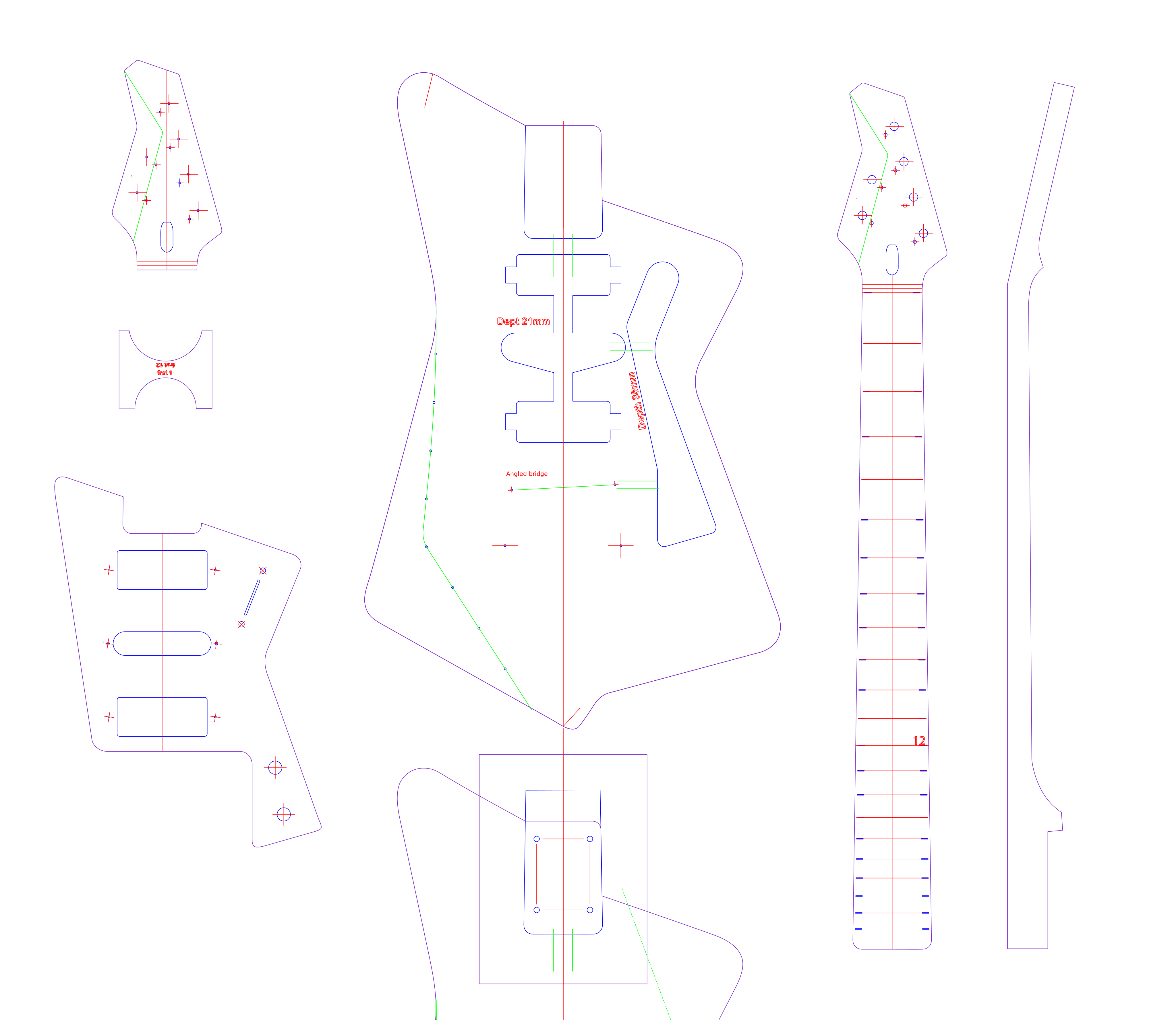
A draft design for an “angular offset” guitar.
But still, this didn’t feel like it added much value. What was its reason to exist? In the meantime, Sterling had brought out a lower-cost version of the St Vincent model. And Baum are already quite reasonably priced. I really was just re-hashing old territory.
“Which is fine” you might say… and you’d be right. There’s nothing wrong with just mashing together some new ideas, having a go, and seeing what comes of it. Learning. The joy of building.
But, the way that my brain and heart are wired means I need to have a “goal” in mind before I’ll even start something. Just because I like something or want to do something, doesn’t mean I’ll do it. I need to find a purpose for that thing to be brought into being. Whether that’s a song recording, a gig, a pedal idea, or whatever…
I’m a geek
I’m a tech and gear head. I have been inspired by technology-heavy instruments all of my life. Instruments like the Kubicki Factor, the Ovation Breadwinner, the Parker Fly, the Steinberger Spirit headless, active electronics, headless guitars in general, MIDI conversions like the Roland GR-1 (my second bass ever was a headless, MIDI bass). and in later years innovations like “fan-fret” multi-scale instruments (often also headless and ergonomically shaped)—the Strandberg Boden being a prime example. Tosin Abasi’s Abasi Concepts guitars are another.

Tosin Abasi and his signature multi-scale guitar Image Source
I love this stuff. My intellectual side gets a total buzz out of understanding the details. I totally get the mechanics/physics of multi-scale. I dig the Fluence approach to things.
I, personally, am quite taken with the “out-there” designs that a lot of these guitars present. I love watching Plini or Animals As Leaders with their strange headless 7 string multiscale behemoths. IIRC, the first time I saw the Breadwinner was Adrian Belew (though I can’t seem to find a reference, so perhaps I was mistaken) and loved it. Steve Swallow with his Fly bass. Stu Hamm with the Factor—so ace!!
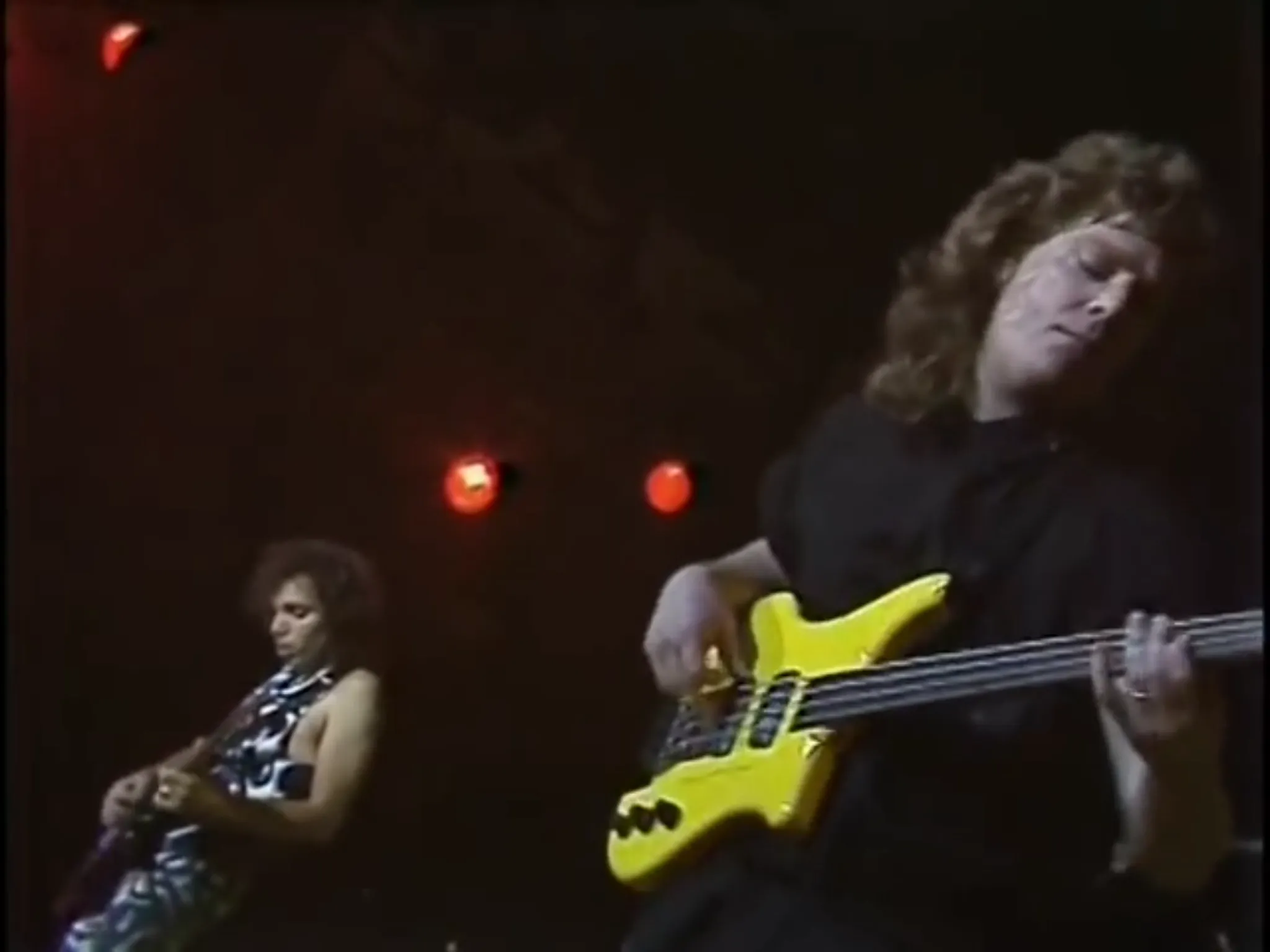
Stu Hamm with Joe Satriani, back in the day with his Kubicki Factor fretless bass Image Source
But, while I love these designs, I’d also feel uncomfortable buying, or playing them live. I’m absolutely not a shredder, even though some of my work would benefit from a multi-scale guitar. I listen to, and sometimes write, quite heavy music, but these designs give a certain… shall we say… impression that doesn’t match my skills!
Still, I also love my classic, vintage guitar shapes. I adore the Fender Jazzmaster, the Gretsch Jet, the (reverse offset) Fender Super Sonic, the Gibson Firebird. I also love all the magical boutique pickup makers out in the world—I have a very long list of “want to try” pickup makers and styles!
And, I’m particularly enamoured with a few newer brands that meld those ideas with a more modern aesthetic take on things. Reverend, Baum (especially the Wingman and Vega Series), Trent Guitars, Powers Guitars… hopefully that gives you the gist.
Melding two worlds
I really feel like I sit between those worlds. I want modern features, but I also gravitate towards a “modern retro” aesthetic.
So, as I kept turning the question “why?” around in my head, over time a seed started to sprout. What might some kind of synthesis of these passions and tastes look like?
The first inkling was applying a multi-scale approach to a baritone guitar. I’d longed for a Bass VI, and was lapping up YouTube demos and reviews of the Gretsch Electromatic Jet Baritone that a bunch of players were lauding for it’s “chuggability.”
I’ve long loved the look of the Gibson Firebird, too. I always imagine it as being for heavy players, but simultaneously holding a vintage panache.
When I looked into it, I was surprised to see very few luthiers had really brought those two things together.
To me, it seems like the totally natural combination of a classic silhouette with metal/heavy application, where multiscale would make total sense. Dingwall had done it (sorta) in the bass world, why not in guitar?
And thus, the spark of an idea.
How might we… apply the benefits of multi-scale and modern electronics to modern-retro sillhouettes, in a way that makes sense for the style they are associated with?
So, for example:
- A multi-scale Firebird for Drop-D and C tuning—still 6 strings, still a trad body shape, but optimised for those heavy drop-tuning riffs?
- A multi-scale offset baritone/Bass-VI with the vibes of a Jazzmaster?
- A multi-scale set-neck single-cut more suited to jazz players, where the low strings are used for bassline comping and the like?
- A multi-scale shortscale, where the low E isn’t completely loose and can handle alternate tunings better? Think the Talman, but with a Fender 25.5” on the low-E, and a Mustang 24” on the top.
These are all instruments that I would play or have a use for, or I’ve considered non-multiscale variants in the past. Well, except the set-neck—but I have friends that would—and I take heart that jazz player Andre Fluidd talks about a similar “gap” in the market. Not that this is about what the “market” just yet.
Right now, it’s just the grounding and purpose I needed to satisfy myself, that pursuing this at all was worthwhile.
That’s the seed that I’m planting and growing—chipping away at.
I’ve started defining the specs and will be commissioning some designs (i.e. tech drawings and CAD) in the coming months.
The “friend with the CNC” has offered to host their semi-pro machine at my home, so we can start to experiment and build our experience in guitar building with it.
I have connected with a luthier and repairer with CNC experience to assist us getting up to speed and accelerating our learning.
It’ll take a while to build our first one. Hopefully, we can then more quickly start iterating, with further experiments and ideas based on what we learn.
I’m so pumped to actually be starting to realise that childhood dream.