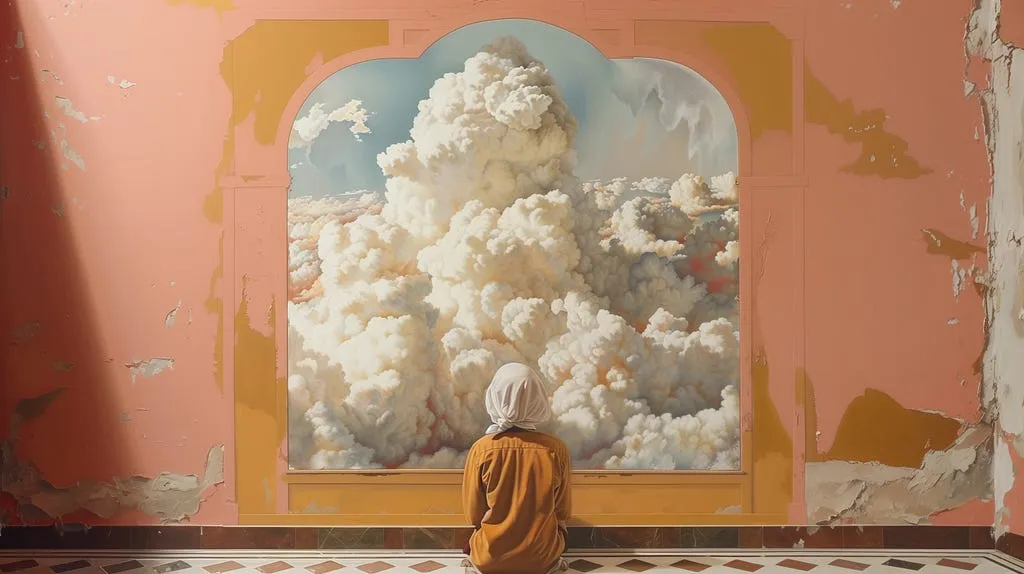
As a musician and graphic designer, I have been thinking a lot about generative AI and the implications it has on my artistic endeavours.
I for one am fascinated by the potential of AI, both as an input to my creative process, but also to produce works that are ‘stand alone’.
One question I had, when I started playing with Firefly, Stable Diffusion and (mostly) Midjourney, was can what is created be considered ‘art’? Can people who use AI tools be considered ‘artists’?
When I was thinking about this question, I found myself coming up with two definitions of ‘art’.
The first was something like:
“a visual or audible work that elicits an emotional response from the person encountering it.”
The second was something like:
“a work that makes me feel that ‘I am not alone’, eliciting a sense that someone else has experienced this before, and I feel that too.”
A third might be:
“the sharing of a real-life or imagined experience from one human to another through a medium.”
If I’m to use some music examples to elucidate the difference.
For the former, I hear a piece of R&B or dance music—let’s say some classic funk.
The lyrics are simple, and really all about the ‘vibe’. ‘I feel good’, ‘Dance your booty off’, whatever.
I hear the music, my booty moves, and I enjoy dancing to the piece. I have an emotional response to the music, but I’m not necessarily ‘connecting’ to the piece. I don’t think to myself ‘I really feel that expresses how I feel about a particular subject’. It doesn’t necessarily engage me intellectually, and the emotional connection is relatively shallow—it makes me feel good, it lifts me up, but that’s it. (Yes, of course there’s so much humanity in the delivery, the feel, the vocal performance—but hopefully you get my point.)
The first artist that comes to my mind as an exemplar of the second and third definitions is Ani Di Franco. I connect with both Ani’s music and lyrics at a very deep level. A song like ‘Joyful Girl’ is on my ‘play at my funeral’ list:
It moves me deeply when I hear that song—to tears at times. I suspect that a majority of folks that read this won’t have that same response and connection to it. My emotional response is a culmination of the years of personal experience prior to my first hearing it, and the years of that song being a companion on my journey since then.
And of course, that song came from Ani’s own experience, and the expression of a creative energy that flows through her. One human to others. It is a deeply human, possibly spiritual, connection.
I’m sure you have songs that are like that for you—eliciting an emotional response goes beyond just feeling ‘nice’, and I feel a form of kinship and personal bond with the artist who wrote the song. ‘Ode’ by Nils Frahm is another. ‘Gorecki’ by Lamb. ‘Last Goodbye’ by Jeff Buckley. ‘The Good Gardener (on How He Fell)’ by Augie March… (I’ll stop there—the list would be quite long if I allowed myself to keep going…!)
In these examples, I find something deep inside of me expressed in a way that I just melt into. That I can’t do myself. I am grateful to the artist who was able to articulate something so meaningful and deep in me. It’s more than the music. There is something energetically personal about the appreciation.
Does that even make sense? I’m interested in your take on those definitions. Do they resonate? Do you have other ideas and thoughts on that?
Anyways, turning attention back to generative AI…
I have had multiple experiences of generative AI imagery that have met the first definition.
Here are just a couple of examples from my own collection of experiments:
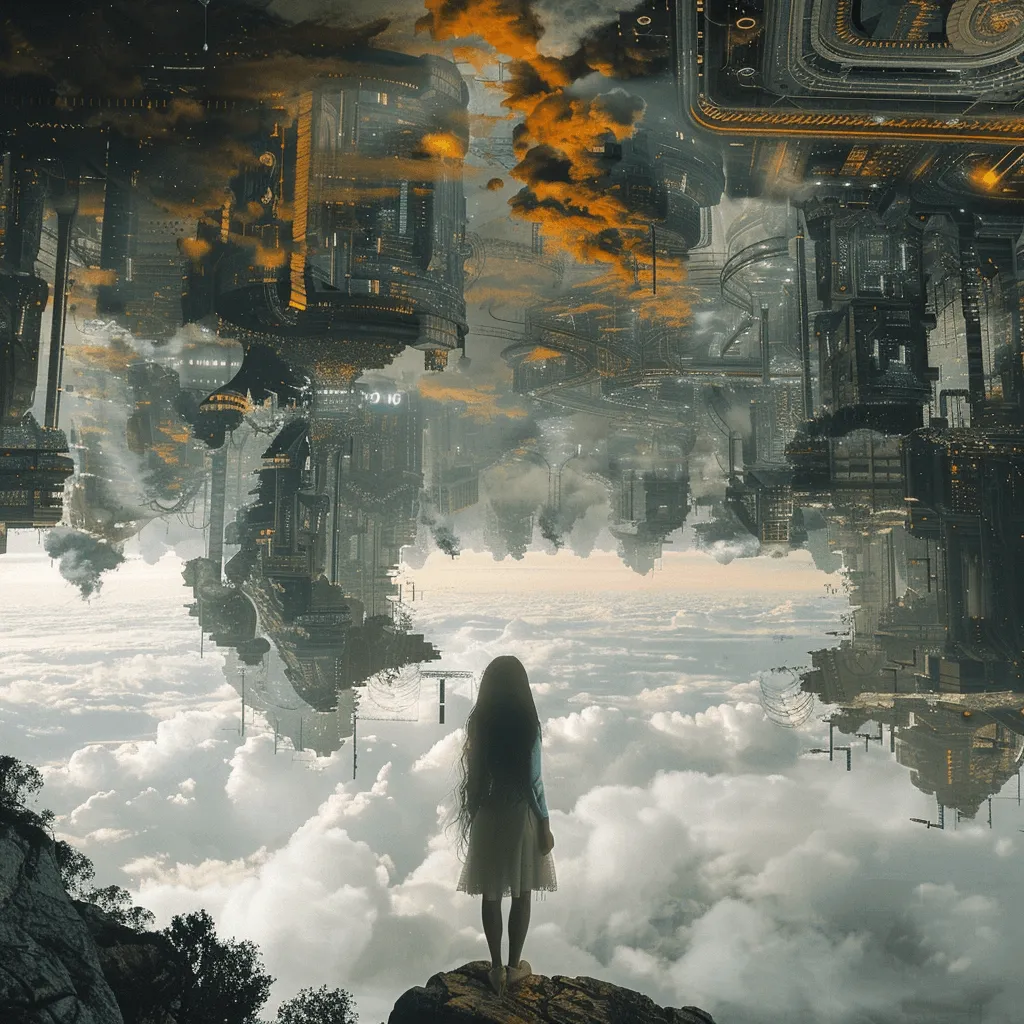
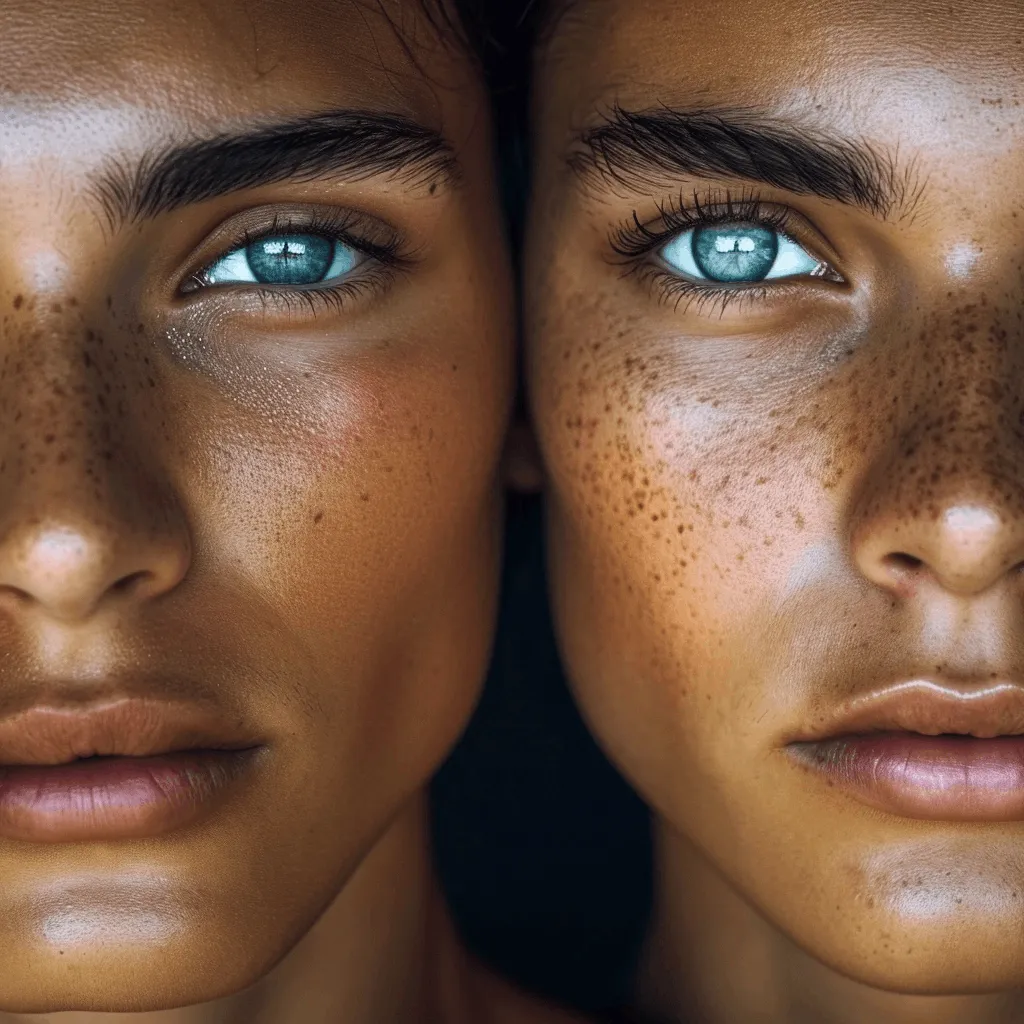
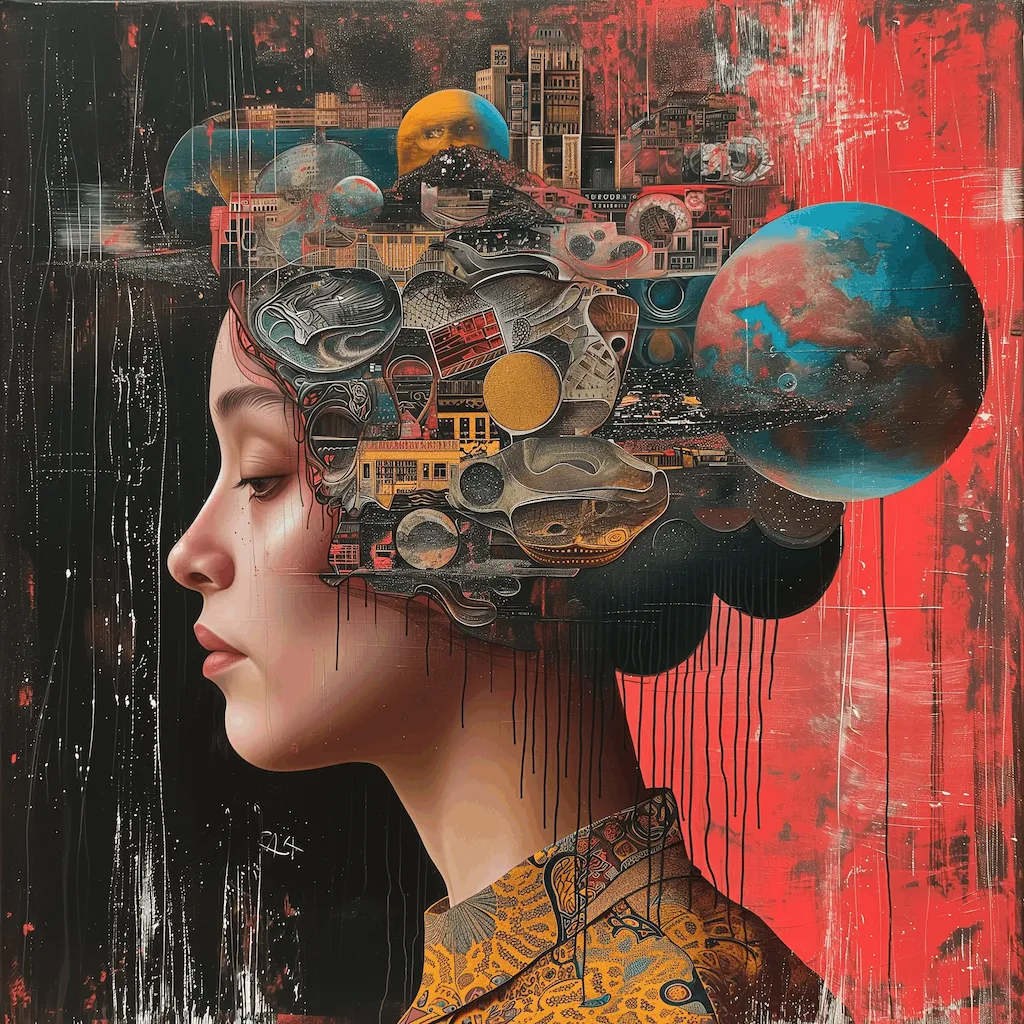
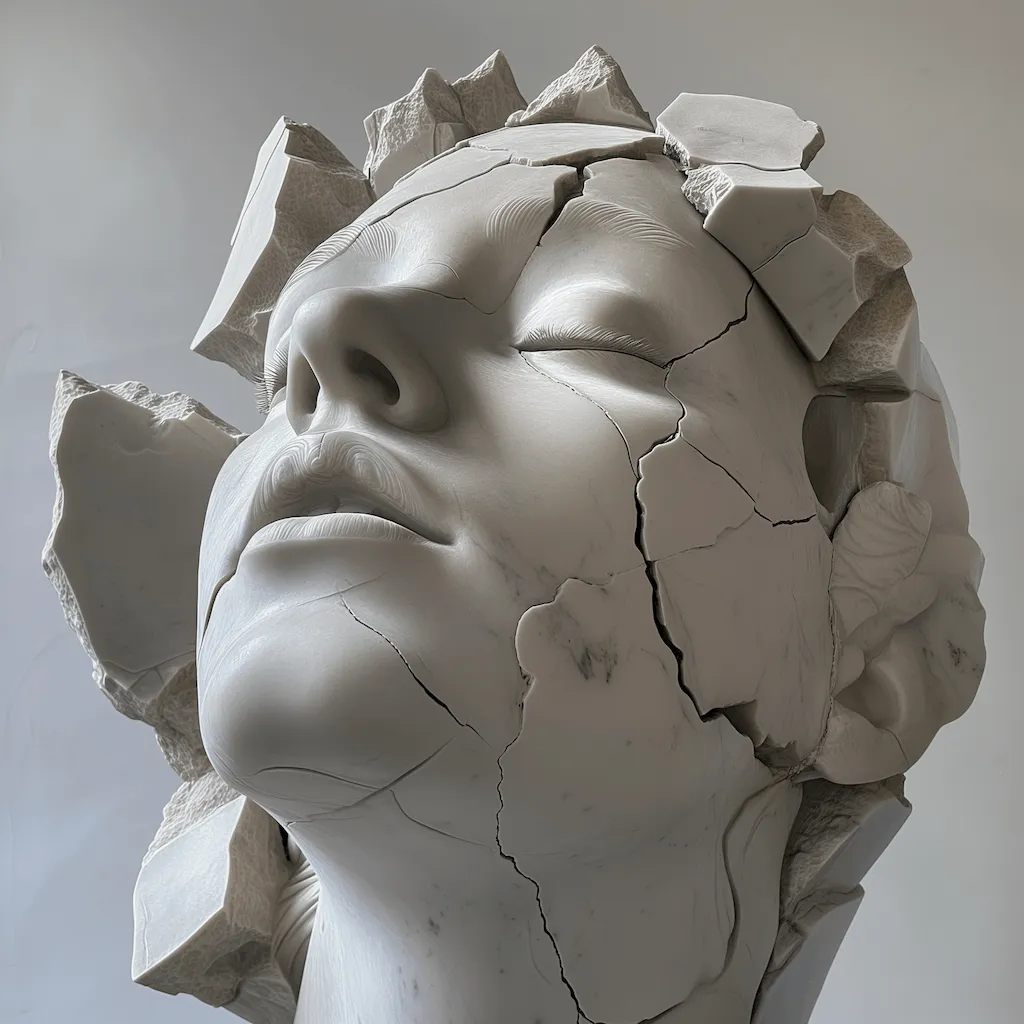
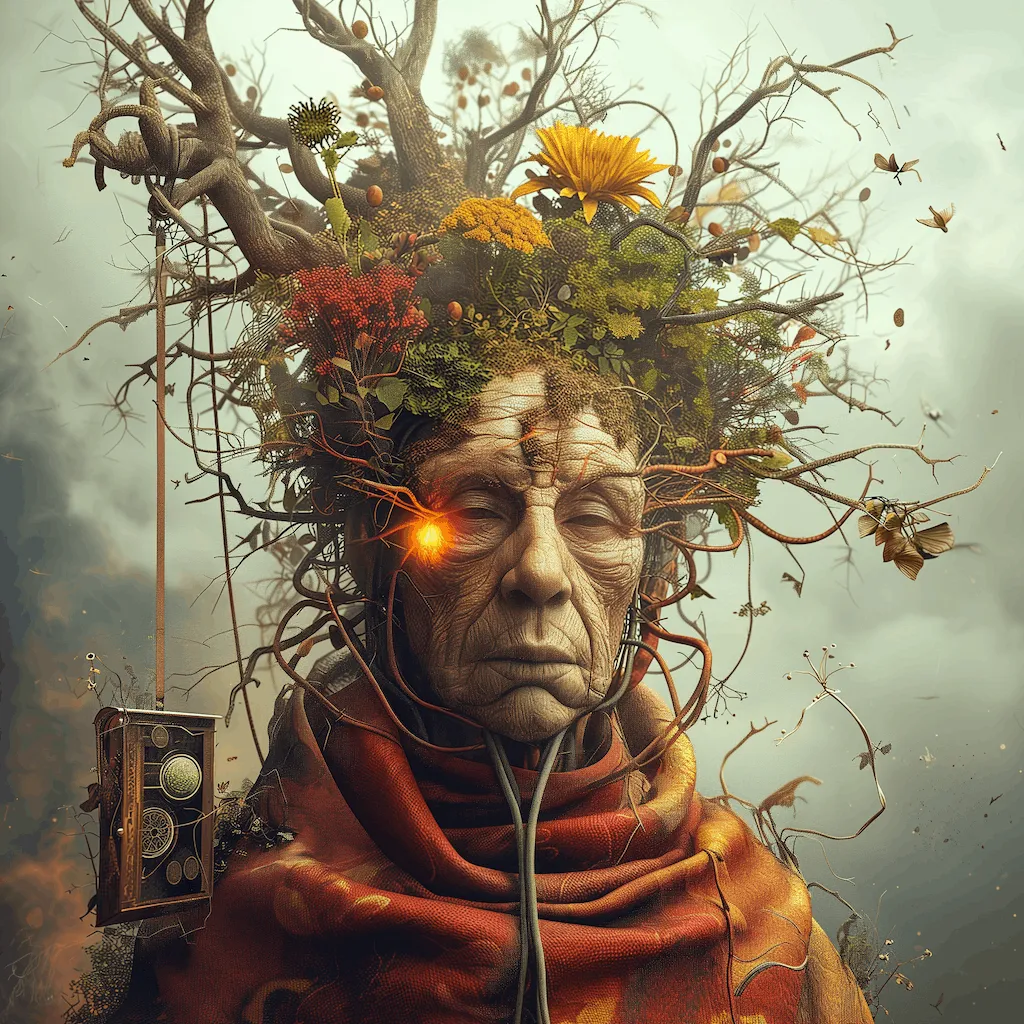
When I see these, I feel an emotional response. They engage me intellectually and emotionally, if I’m honest. I feel that, by my first definition, they are ‘art’.
As an aside: I find I have to keep reminding myself that the person in an AI ‘photo’ isn’t a real person. For example, I’ve been doing some fashion-related work with Midjourney, and I have to remind myself—somewhat embarrassingly—that the model I find cute or sexy isn’t a real person!
But I must admit, even though I think they fit that definition, I find it hard to consider myself an ‘artist’. I came up with a few words that interested me and I thought might make a good prompt, and then plugged them in to ‘see what the AI came up with’. My role is one of ‘editor’—pruning the myriad results and finding the gold amongst a raft of options that don’t resonate with me.
And, yes, I might then go on to finesse the ideas. Tweak the prompt. Request it refashion certain areas of the image. Perhaps post-process it (which I consider more a ‘technician’ skill, rather than purely ‘artistic’). But ultimately I didn’t put paint on canvas. I didn’t click the shutter on a camera. I didn’t experience the moment. I didn’t even necessarily imagine the moment. Neither did the AI, for that matter…
So I’m conflicted. When I post images on Instagram I hesitate to use language that implies my own creative input into the image I’m presenting. “Here’s what #midjourney came up with”, “This is one interpretation from #midjourney”.
But I’ll be honest with you, I DO feel some sense of ownership. I feel that AI is a kind of ‘collaborator’. More than just a tool.
As a comparison, I think about my favourite digital audio app, Ableton Live. It has some very cool instruments that do stuff that I’m not really ‘doing’. Arpeggiators, glitch functions, random parameterisation, etc. But these all feel very ‘machine like’. Like a piece of equipment in a studio. But working with Midjourney and other tools I’ve experimented with just feels different, somehow.
Which brings me to the second definition—I didn’t think that AI generators will be able to elicit that level of connection, a sense of personal connection. And I think I still fall on that side of the fence.
The AI didn’t experience anything, so how can I have an emotional connection to the ‘creator’ of the piece? To have a sense that I feel ‘seen’? That someone else has felt what I felt? That sense of kinship.
The AI doesn’t actually ‘know’ what I’m talking about. It’s the ultimate mash-up, in one sense. A collection of pixels forming out of its database of things, that matches certain keywords.
However, it’s grey. I do believe that I will never have the same level of connection that I feel to Ani, Lou & Andy, Jeff or Glenn.
But what about that sense of ‘collaboration’? That sense of it being ‘more than a tool’? that makes it feel a little bit grey…
So what does this mean for artists?
I think that to remain relevant in the decades to come, artists will need to double-down on their emotional input into what they create.
A ‘feel good’ song, where the lyrics are a bit bland or ‘naff’ will not cut through. AI will own that space. Little wonder major music labels are trying to get in front of this curve, adding AI ‘artists’ to their roster.
A piece of stock photography, that only exists to illustrate a concept or be ‘filler’ in a website design—AI will own that space too.
Ideas that are fanciful or ‘beyond reality’—AI will own that space to. For example, my partner works with mythology, and has come up with some wonderful imagery to represent the gods and mystical concepts, that you could never do in a photoshoot. Certainly not without many thousands of dollars and a LOT of post processing and computer graphic embellishment.
But I think there will remain space for art that comes from a more emotional place, and shared in real-life experiences. Dancing to a real band at a live show. A song with lyrics that really, deeply speak to your own experiences. Performance art. A real, authenticated photo of a true life experience.
One challenge that this presents is that many artists use these more ‘generic’ or lower-value activities as their means to make money to support their ‘real’ art. Stock photography was a way for photographers to make an income. (I don’t think wedding photography is going away any time soon, but corporate headshots will be a thing of the past before long I suspect.) A lot of sync music will be largely be done by AI, as I think this video promotion of Adobe’s new AI music ‘co-creator’ demonstrates:
And I don’t think that the long-standing challenge of ‘generating income’ to live on is going to be solved by the likes of Bandcamp and Patreon for the vast majority of artists any time soon, as much as I admire and respect these tools and the communities that surround them. Venues won’t suddenly start paying bands more. People won’t suddenly start directly compensating artists outside of their raft of monthly subscriptions to large corporate content carriers (like Spotify). And Spotify is unlikely to suddenly grow a heart and share more of its profits with artists. (To be clear, I’m singling out platforms like Spotify that do very little to re-invest in the community that supports them, compared with other platforms that do invest in original content and creators.)
AI companies need to care about this, too. Because AI needs real artists.
These tools can’t do what they do without a large base of content, provided via accessible ‘transports’. And AI at the moment is a loss leader. No-one in this space is making money (as in profits) from it yet.
While this will change over time, the business models are likely to be already set. And those models don’t include sharing revenues with artists with works inside their training data.
How could they even fairly compensate artists, when the AI has no way to ‘apportion’ the creative input of individual artists in its training set? In many cases it probably doesn’t even ‘know’ (naming an artist in a prompt would be an exception, but even then the generated output is likely to be drawn from an amalgam of inputs).
But I digress—that’s actually a whole other post I want to do—so let’s leave that there, for the moment…
I’m not sure that the thoughts I’ve outlined here really clarifies anything—certainly not to a point where I can claim to really ‘answer’ the question. But hopefully this is useful food for your own thinking and reflection on the matter.
Because we really do need to be thinking and reflecting on it, lest we lose a real sense of culture and artistic endeavour…
What do you think? Where do you see AI landing? Benefit? Danger? Both?