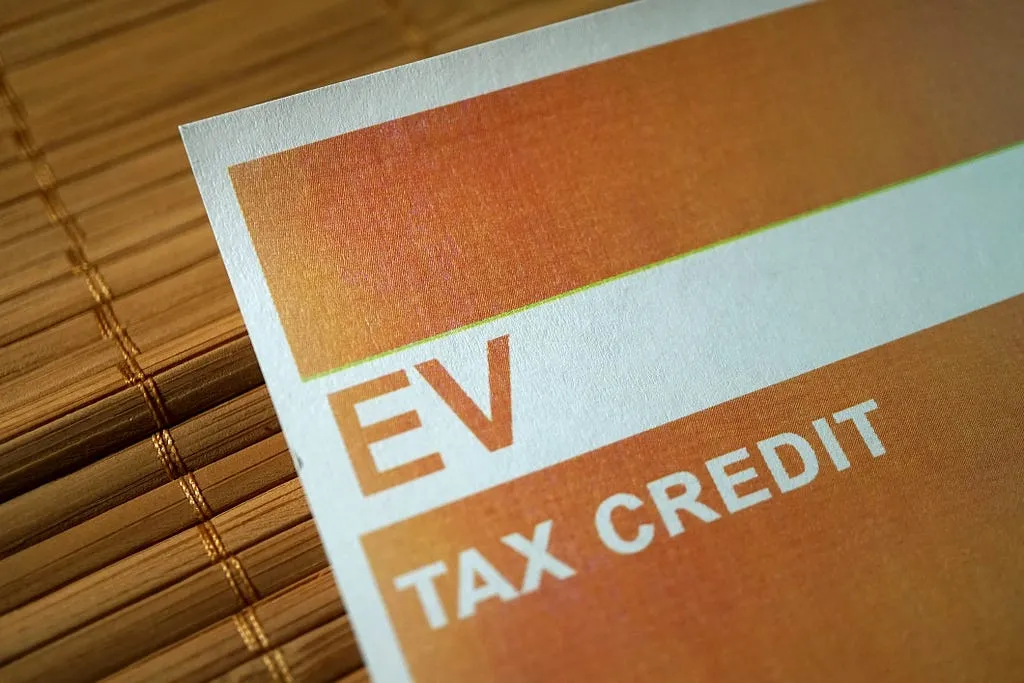
Due to a bingle that resulted in my car being written off, my partner and I have just purchased an electric car… a long-term dream of mine.
As noted in a previous post, we’d been watching the market closely, and had planned to make the switch in about 12–18 months. This is when a number of cars in the $50–60k price range are going to become available here in Australia.
So, given this had all been brought suddenly forward, and the currently high price point for the cars that are available right now (i.e. to drive off the lot), I was grateful for the Federal Government’s recently-introduced Fringe Benefits Tax (FBT) exemption for electric vehicles, under a novated lease.
Needless to say, there are a lot of advantages to this type of arrangement, including the fact that a good portion of the car’s running expenses are included in the deal (essentially being paid for with pre-tax dollars). Depending on your personal effective tax rate, this can add up to a big benefit.
As one might expect, though, there are a quite a few conditions on the FBT exemption. And if you are considering taking advantage of it, too, it’s important to familiarise yourself with these conditions, and to get solid financial advice.
For the purposes of this post, there are a few notable points that I’d like to share with you. Specifically, the car needs to:
- be priced below the Luxury Car Tax (LCT) threshold; and
- be purchased and registered after 1 July, 2022.
Our personal experience
While we experienced less than stellar service from certain manufacturers (ahem Hyundai), we fell in love with the Kia EV6 GT (rear wheel drive) on our first test drive. Given stock constraints, and our tight timeframe (i.e. needing a new car, quickly), we put a deposit down on a demonstrator vehicle.
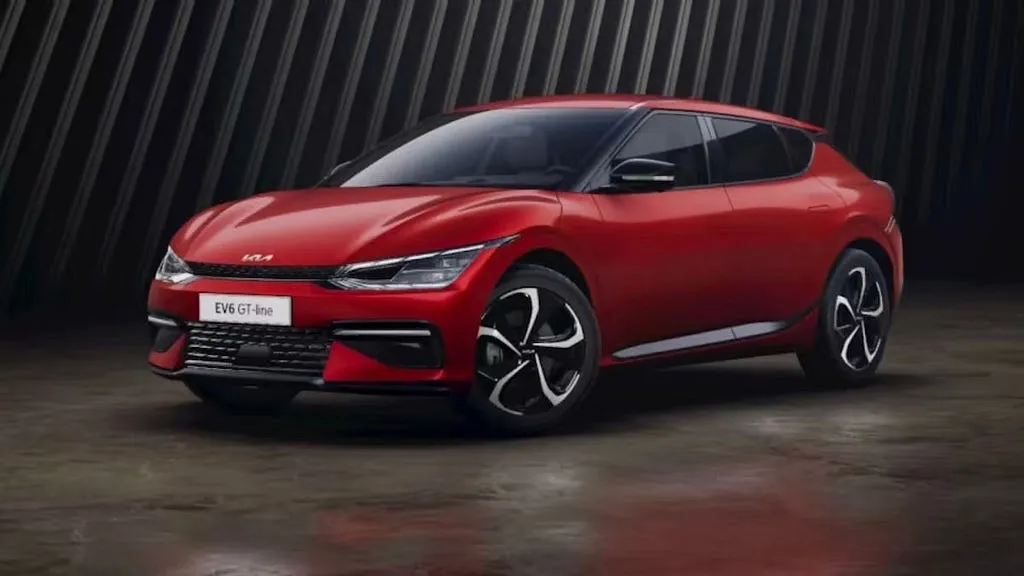
The fab Kia EV6 GT rear-wheel drive—our new trusty steed (Source)
We had thought that buying a new car off the lot meant that it would be considered a new car. Silly us… 😵💫
When I sent the details of the car to my finance people the next day, they quickly pointed out that we needed to check the registration date. (At this point in the process, I’d missed this requirement in the FBT exemption details.)
As it turns out, the demonstration car had been registered prior to 1 July, 2022. This meant that it was ineligible for the exemption and was, therefore, unsuitable to finance.
Despite their best efforts to support us, the dealership we’d been working with was unable to provide an equivalent car. While they had a different colour coming off the boat sometime in the next 6 to 8 weeks (did I mention stock constraints?), this didn’t match our tight timeframe. 😣
So, we rang around a number of other dealerships and found another demonstrator vehicle that met our requirements.
- The LCT didn’t apply at the time of our purchase? Check ✅
- Purchased after 1 Jul 2022? Check ✅
- Registered after 1 Jul 2022? Check ✅
So, we put another deposit down, and started arranging finance, again…
And in the midst of it all, our accountant at work raised another critical question. Is a demonstrator vehicle considered “second-hand” by the ATO?
You see, the FBT exemption rules for a used vehicle are slightly different. If it is considered “used,” LCT couldn’t apply at any point in the car’s lifetime.
For example, if I bought a second-hand Tesla Model S Plaid from someone, it wouldn’t matter if the purchase price was now under the LCT threshold (in the 2023–24 financial year), but if LCT applied at the time of the original owner’s purchase date (which it no doubt would have), then it is not eligible for the FBT exemption.
(There’s a whole other post on why the LCT threshold is the same for electric vehicles as to other cars—when the reason electric cars are so expensive has nothing to do with ‘luxury’—it’s all about the cost of the battery and technology. But, I digress…)
Again, we thought buying a demonstrator vehicle was buying a new car. But was it?
This is one of the relevant passages on the ATO website:
An electric car is considered “used” when it is used or available for use by any entity or person.
So, more specifically, the question was: Is a demonstrator vehicle being “made available for use” by the dealership?
I knew from past experience that dealerships effectively buy demonstrator vehicles (they’re no longer listed as available stock to other dealers). And I also knew (from the car we put our first deposit down on) that the registration was in the dealership’s name. So, it stood to reason that it was considered “used.” But this definition was just grey enough that I wanted to clarify… to be sure, to be sure.
I asked both my personal accountant, and work’s accountant. But neither of them could provide a definitive answer.
So, I rang the ATO for clarification. After spending 3 hours in phone queues, being disconnected twice, and then spending 60 minutes on the phone with the ATO rep, their answer was “follow the definition on the website” and that “the dealership needs to answer that.”
Seriously?!? 🤯
So, I rang the dealership.
After discussing it with them, we realised there was a “short-cut” that would make the question of whether it is considered “used” or not as moot.
“Did LCT ever apply to this vehicle?”
The answer was a definitive “no.” Not now. Not when the dealership took delivery. So, regardless of whether the ATO considered it “used” or not, we were in the clear.
Phew!
Since we made that determination with the dealership, we have come to the conclusion—pretty much beyond any doubt—that the ATO would consider a demonstrator vehicle “used,” by their definition.
Mind you, the ATO hasn’t confirmed that. But… both accountants came to the same conclusion. And the dealership believed the same. It seems this would be the “right” interpretation.
Now, word is that the ATO are going to do a review of these applications in the near future. (We’ve heard this from a few folks). So, it’s important to get this stuff right, right!?
And for this reason alone I find it immensely frustrating that the ATO could not answer this question plainly and clearly. This frustration is exacerbated by the fact we have got a similar “non-answer” from the ATO on another key question, regarding how we calculate electricity costs for the vehicle. (But that’s a frustrating subject for another post…) 😖
So, if you are considering buying an EV under the FBT exemption, and an ex-demo car is in your sights, I hope that this story is helpful for you to avoid any potential “gotchas.”